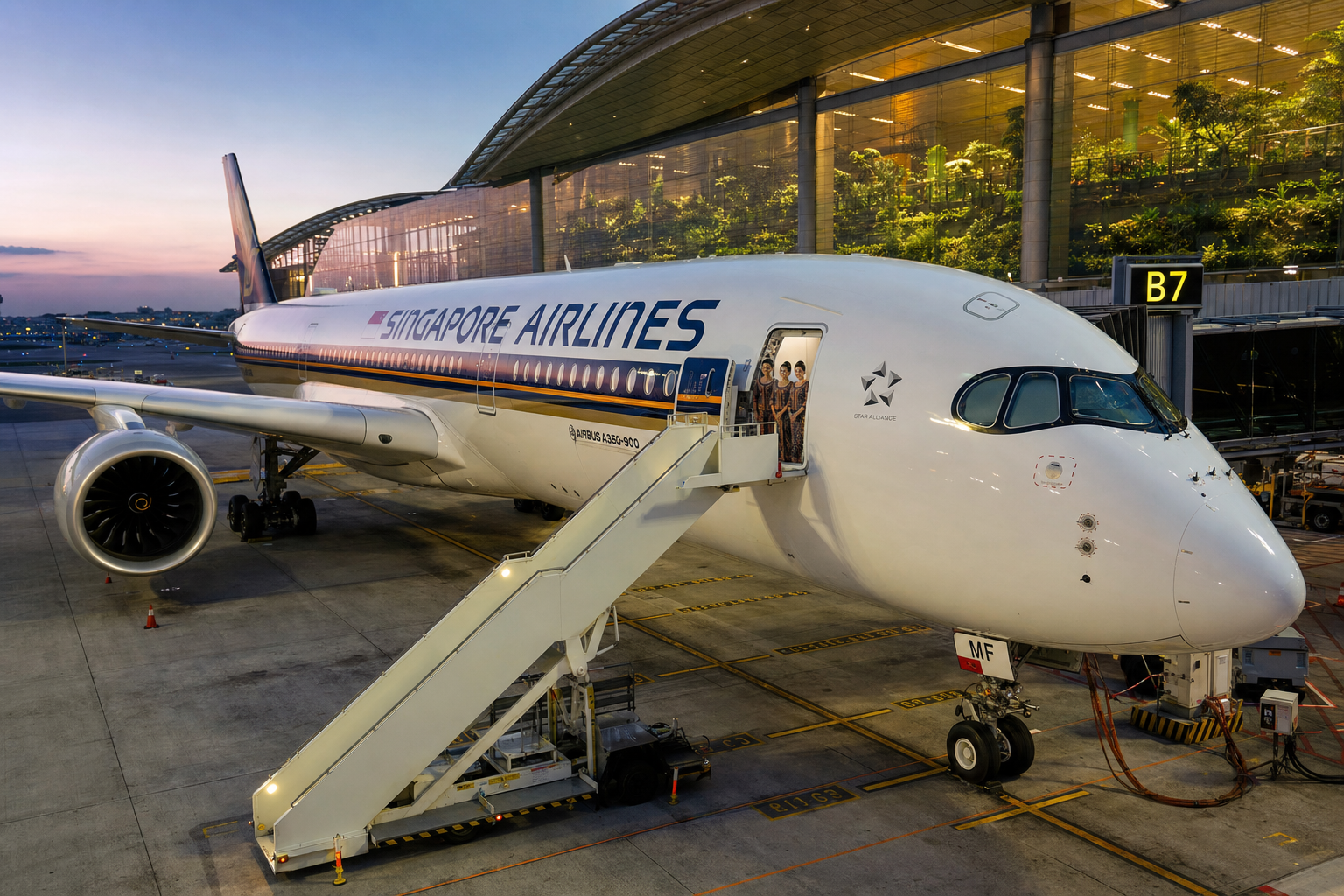
The woman in the kebaya leans in, not with the forced familiarity typical of premium cabins elsewhere, but with the quiet confidence of someone who has done this a thousand times for people who notice the difference. She places a hot towel—properly hot, not tepid, not over-scented—into my palm with a nod. The boarding music is not designed to signal anything except that this, right now, is the beginning of the journey. There is no overhead announcement urging quick stowage or apologies for delays. No one is shouting. It is already clear that here, the ritual still has form.
Boarding Rituals That Still Mean Something
You do not get herded onto Singapore Airlines. The boarding sequence is neither an exercise in chaos nor a display of over-automation. There’s a patience to the way the crew stands—not blocking the aisle, nor hovering with that needy, retail energy. Passengers are greeted with names, but there is no awkward glance at a manifest; the vocal cadence suggests they actually remember you from a previous flight, and sometimes they do.
Hand luggage is not policed as if it’s a threat to global security. Instead, a discreet hand offers to stow a jacket or bag, and then withdraws. The absence of plastic is not performative environmentalism but simply the way things are: towels are cotton, menus are card, slippers are cloth in a brown drawstring pouch. There is a sense that every object has been selected for its tactile quality, not just for ease of bulk purchase.
Compare this to my last Emirates flight out of DXB, where the “premium” experience was a confused assembly of LED mood lighting, vanilla-scented wipes, and announcements delivered in three languages at maximum volume. Efficiency, yes, but also the distinct feeling of being processed. British Airways is, if anything, more dispiriting for its apologetic tone—boarding as an ordeal to be endured by staff and customer alike, the welcome already sounding like an excuse.
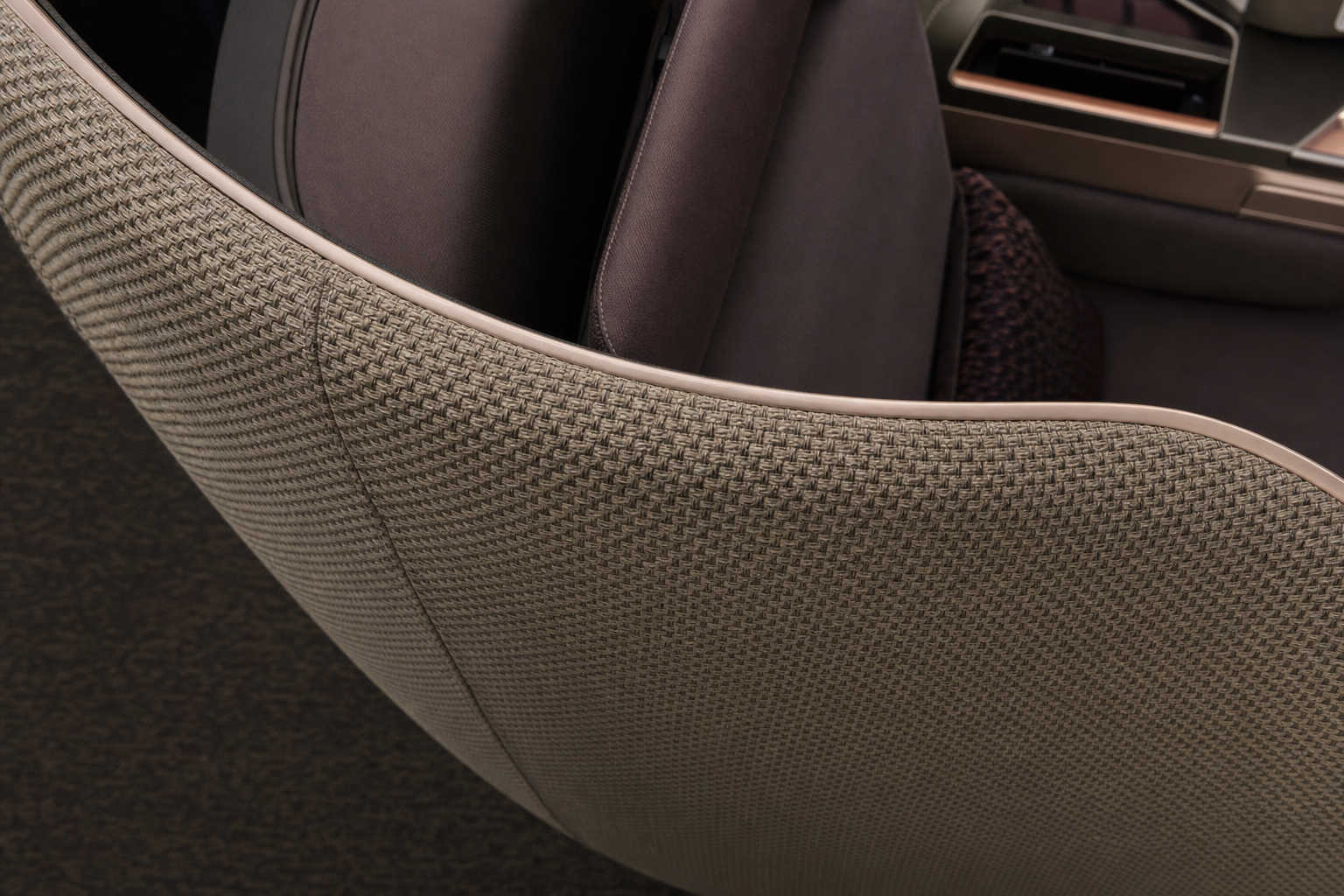
The cabin on Singapore Airlines is built to be inhabited, not just transited. The seat is upholstered in actual fabric—woven, not laminated. Lighting is considered, not theatrical. There is no push for duty-free, no “upgrade now” screens blinking in your eyeline. Instead you get anticipation: the promise that what follows—dinner, sleep, arrival—matters enough to shape your mood.
At Changi, the effect is even more pronounced. No one rushes you out of the SilverKris lounge before boarding; the transition from lounge to jetway is a soft gradient, not a cattle call. The boarding ritual, in this age of biometric gates and automated lanes, still means something here. It is your first, and maybe last, signal that you are a passenger—a person—rather than just a seat allocation.
What Sleep Is Worth at 35,000 Feet
The seat on Singapore Airlines business class does not merely recline. It transforms. The surface is properly flat, with no hidden ridges or seatbelt humps engineered to meet safety regs at the expense of spinal alignment. Bedding is not an afterthought—a thin, static-charged sheet as on BA—but a quilted mattress topper and a pillow with actual loft. You do not need to improvise with your coat as a second cushion.
Noise is managed, not just with Bose headphones but with an entire approach to service. Crew speak quietly, and only when necessary. There are no piped announcements at two in the morning about duty-free sales or time zone trivia. The galley does not double as a social hub for off-duty staff. Emirates, for all its claims to luxury, fills its A380 with constant activity—ice clinking, doors slamming, PA interruptions about connecting flights to Lahore. ANA has origami-level engineering but somehow the bed still feels designed for a smaller, less complicated species.
On Singapore Airlines, you wake up after six hours and do not feel like you’ve lost a bet with your own body. The skin is not dried out from recycled air. Your joints do not ache from having to fit around the seat’s geometry. You are, if not restored, at least not diminished by the experience—a rare sensation in 2026, and one that should be unremarkable, but is not.
Meals Designed to Interrupt the Routine
Dinner on Singapore Airlines is not just a break from the monotony of the flight; it is a genuine occasion. The menu is not a globalist compromise, nor an exercise in over-promising. Regional specificity is the norm: the chicken rice is Hainanese, with poached breast and fragrant jasmine, not a bland international tray with a sachet of soya sauce. There is a sense that someone actually cares—enough to make sure the sambal has heat, the cucumber is crisp, and the rice is not microwaved into oblivion.
The meal service is paced, not hurried. Unlike Emirates, where dishes arrive and depart according to a fixed clock, or BA, where the service is apologetically delayed and then rushed, here, the rhythm is human. The crew watches for the moment you finish, not just the empty plate. Butter comes at the right temperature; wine is poured quietly, without the multi-step flourish of a sommelier but with an understanding of what “top up?” actually means.
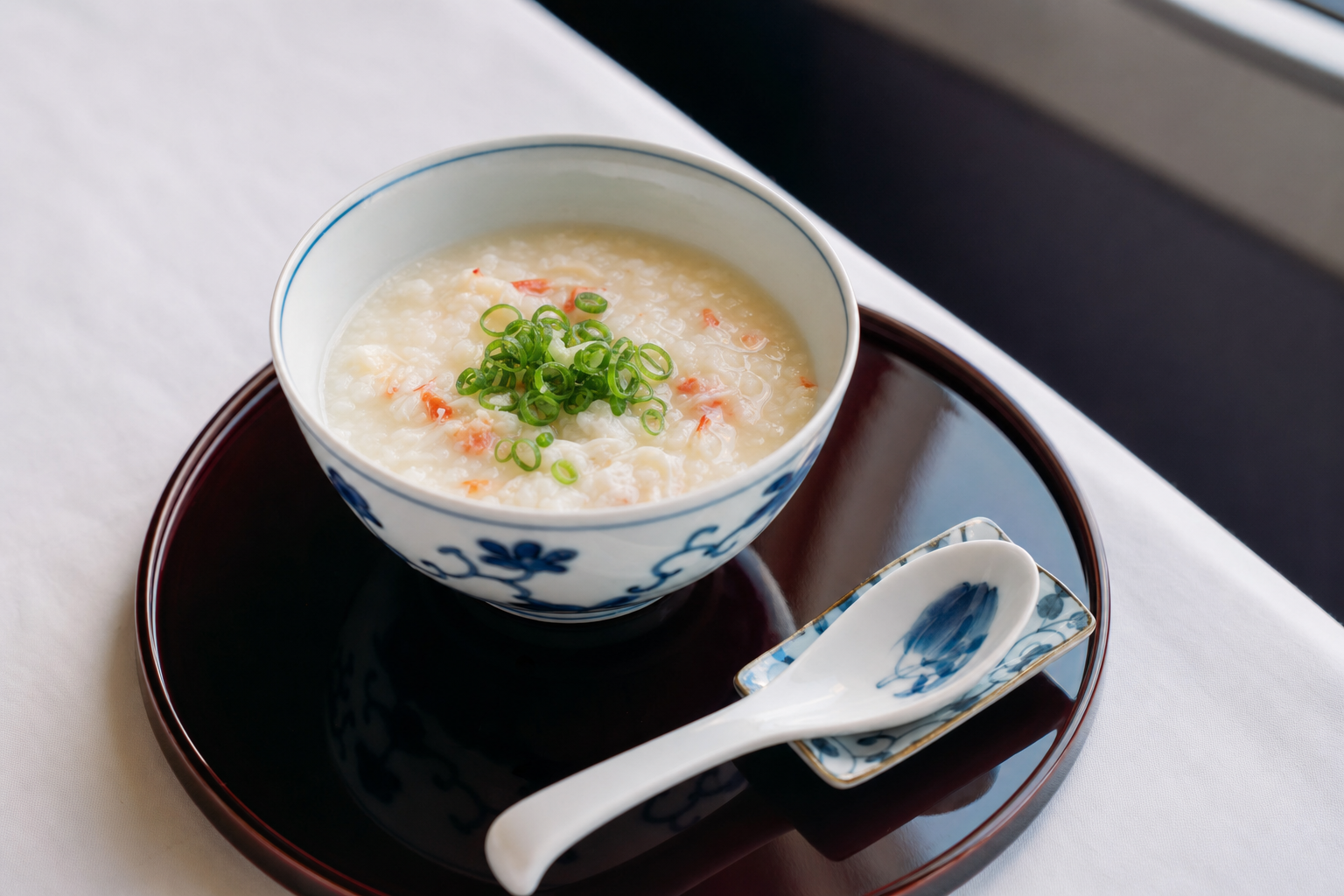
On my last flight, somewhere north of Kabul, crab congee arrived as the cabin lights dimmed. The porridge was properly loose, garnished with pickled scallion and enough white pepper to cut through the altitude-dulled palate. It was, for the forty minutes it lasted, not “airplane food” but simply food—an interruption, not a necessity. The ritual of dining at 35,000 feet was respected, not simulated.
The Attentiveness Dividend
Singapore Airlines is not in the business of algorithmic hospitality. The crew do not hover, but they do not disappear either. A glass is topped up before you ask. If you opt out of a meal or a wake-up call, it is remembered—not just ticked off on a digital checklist. There is a sense that the crew are paying attention to people, not metrics.
It is possible, on other airlines, to feel as though you are being monitored rather than served. The line between service and surveillance blurs, and personality is sanded down in favour of compliance. On Singapore Airlines, attentiveness is not just a process but a dividend—a return on the airline’s singular investment in actual human presence.
Can Anyone Else Catch Up?
Comfort at altitude and the rituals that once marked long-haul travel are not endangered by technology, but by priorities. Hardware can be copied; bedding can be sourced. What most carriers lack is the will to invest in the labor—of noticing, anticipating, and remembering—that makes luxury more than a veneer.
"Comfort at altitude is not complicated; it is only expensive, and increasingly rare."
Singapore Airlines’ approach is not nostalgia. It is not even particularly innovative. It is a blueprint for meaningful comfort that others could follow, if they cared enough to try.