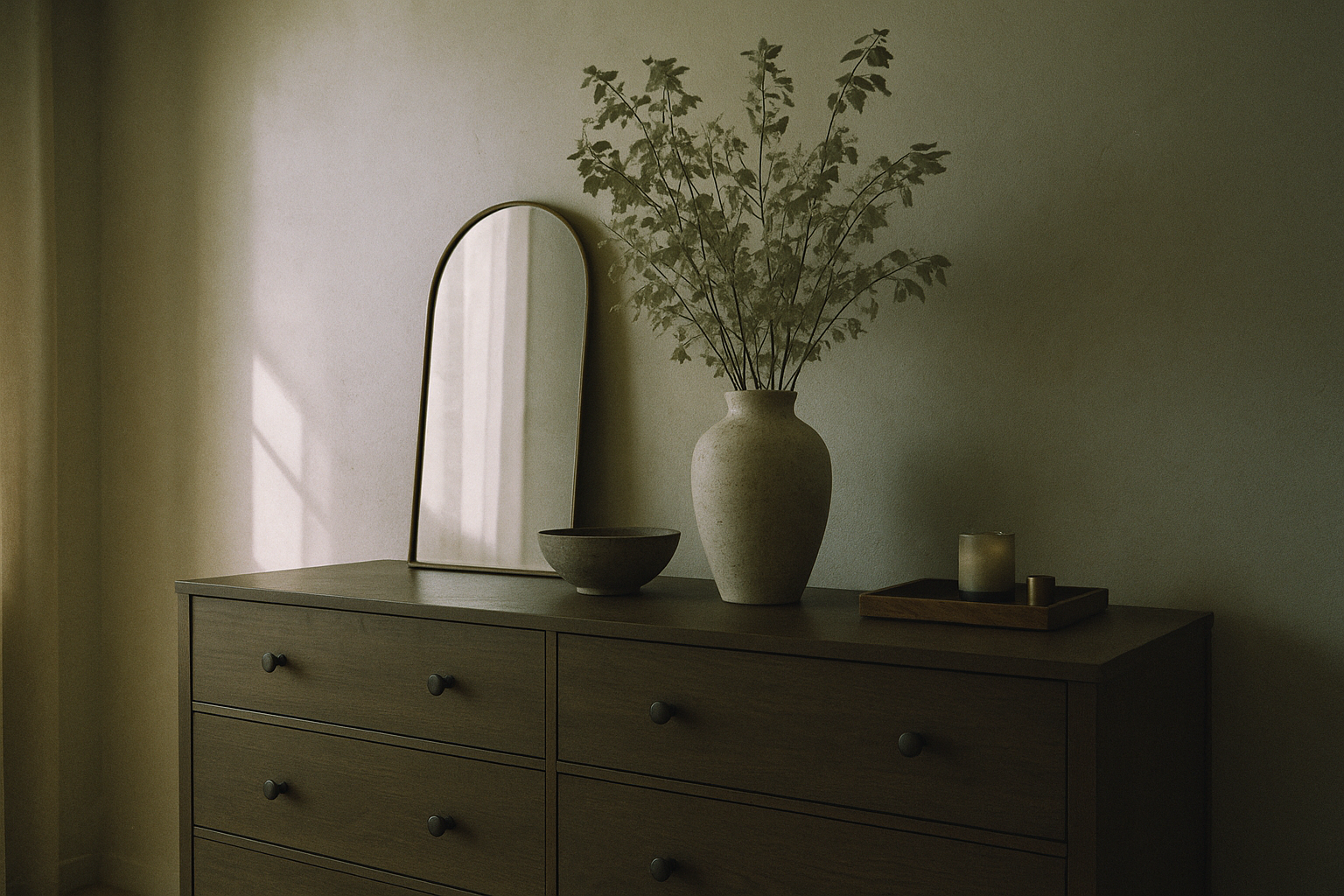
In the lexicon of modern interior design, the dresser is often an unsung hero—a reserved piece furnishing domestic spheres with routine reliability. Yet, this historically utilitarian object harbors a latent grandeur that, when thoughtfully styled, has the power to transform an environment through the lens of quiet luxury.
The Historical Elegance of the Dresser
The dresser, as a concept, traces its ancestry to an era when homes were sanctuaries of artistry and function combined. In Europe, particularly during the 18th century, dressers began to evolve from simple storage solutions into elaborate displays, underscoring the cultural shift towards personal expression in private spaces. The craftsmanship of these pieces, often exhibited through intricate veneers and polished brass hardware, elevated them to objects of admiration.
Reimagining Functionality in Minimalist Design
In contemporary design philosophy, the dresser is revisited with a renewed focus on minimalist furniture design. This approach doesn't negate its decorative past but rather integrates it within a framework that values subtlety and substance. Herein lies the art of luxurious dresser styling—the balance between function and form, creating a visual and tactile harmony within a room.
Quiet luxury decor is encapsulated in these moments of curated simplicity, where each piece of furniture imparts a narrative of its own.
The Art of Elevated Surfaces
The surface of the dresser, once merely a resting place for miscellany, becomes an arena for subtle storytelling. This is where minimalist artistry comes into play. Through careful selection and arrangement of objects, it is possible to imbue a sense of depth without cluttering the visual field. Consider a pair of sculptures, modest in scale but rich in materiality, positioned asymmetrically to evoke a sense of movement and dialogue.
Still-life paintings of the 17th century offer a wealth of inspiration for such compositions, where each element—flora, fruited dishes, curios—was painstakingly chosen and arranged to capture a fleeting beauty frozen in time.
Material Matters
A dresser's materiality is as integral to its presence as its form. Within minimalist furniture design, the choice of wood, metal, or composite materials can significantly alter its character. Rich, dark timber may evoke an air of classic refinement, while lighter woods or matte finishes can embed a modern aesthetic of unobtrusive grace.
Material selectionenables the dresser to complement the room's overall design language, harmonizing with the prevailing color palette and textural contrasts.
Just as a bespoke suit or an expertly crafted pair of shoes changes the demeanor of its wearer, so too does a well-appointed dresser alter the tenor of a room. It strides quietly, yet confidently, into the limelight, commanding respect without a demand.
The process of “dresser transformation” is not merely an aesthetic pursuit; it is an engagement with space and memory. It invites us to consider our surroundings, reassess what we value, and rearrange these symbols of significance accordingly.
Interior styling tipsthat respect the past while engaging with the present are what make the dresser a cornerstone of quiet luxury decor.
Our engagement with objects is, at its core, an interaction with history, culture, and identity. A dresser, in its quiet command, becomes a vessel for this interaction—a touchstone within the home.
Redefining Presence
The phenomenon of the dresser as a statement piece in minimalist surroundings signals a broader shift towards values that favor refinement and intentionality. Here, in the absence of ostentation, the materials speak softly yet eloquently.
Each piece, each line, each contour is a testament to the belief that the objects around us contribute to the narrative of our lives, operating silently yet powerfully in shaping the atmospheres we inhabit daily.
“The transformation of the dresser into an emblem of quiet luxury reveals much about our evolving relationship with design and the spaces we call home.”