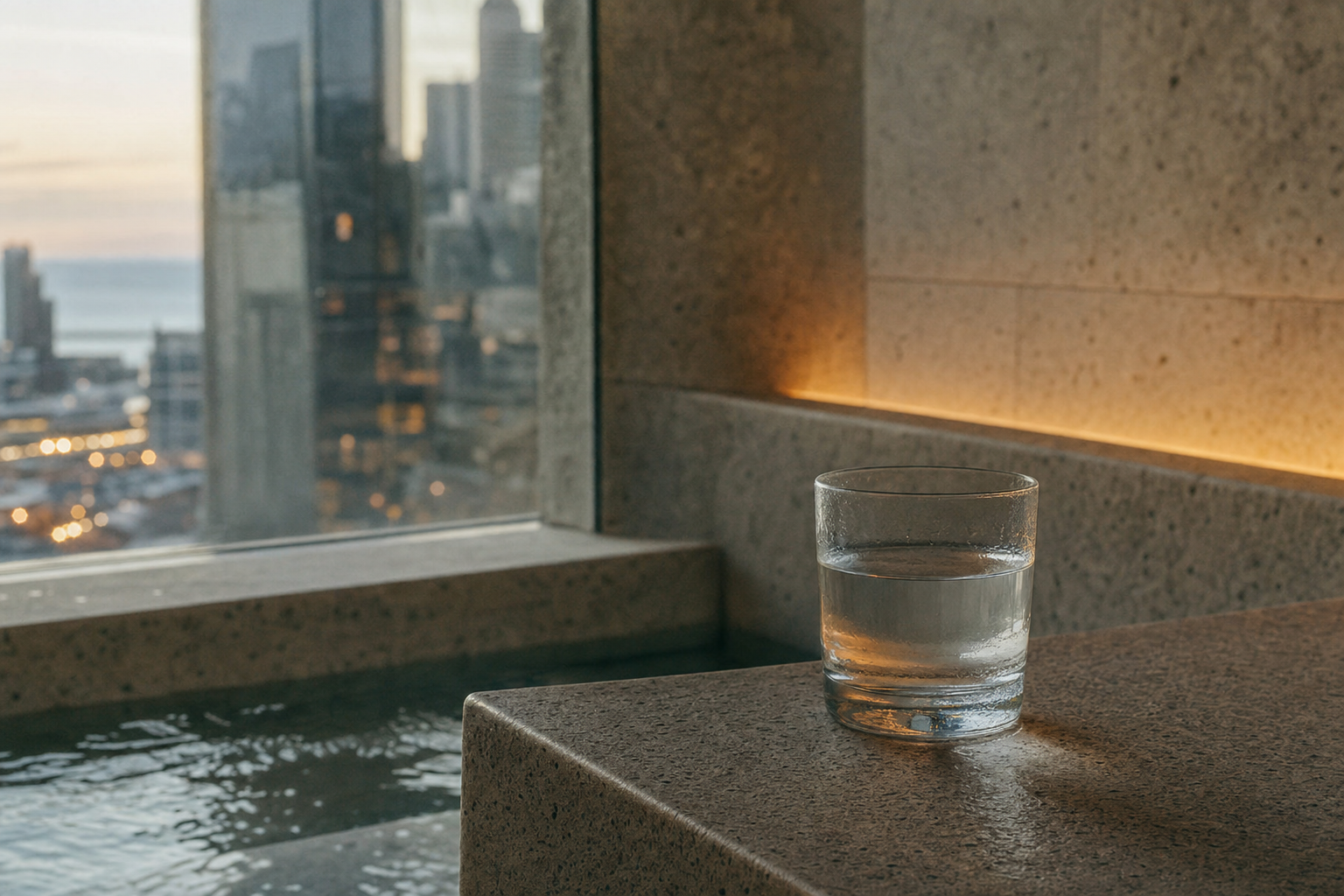
What draws people to a city where the lake wind slaps rather than soothes, and where wellness isn’t whispered but negotiated? Is there something about Chicago’s spas—wet, loud, communal, unpolished—that feels more honest, or at least more original, than anything on either coast?
Bathhouse Roots, Nordic Swagger
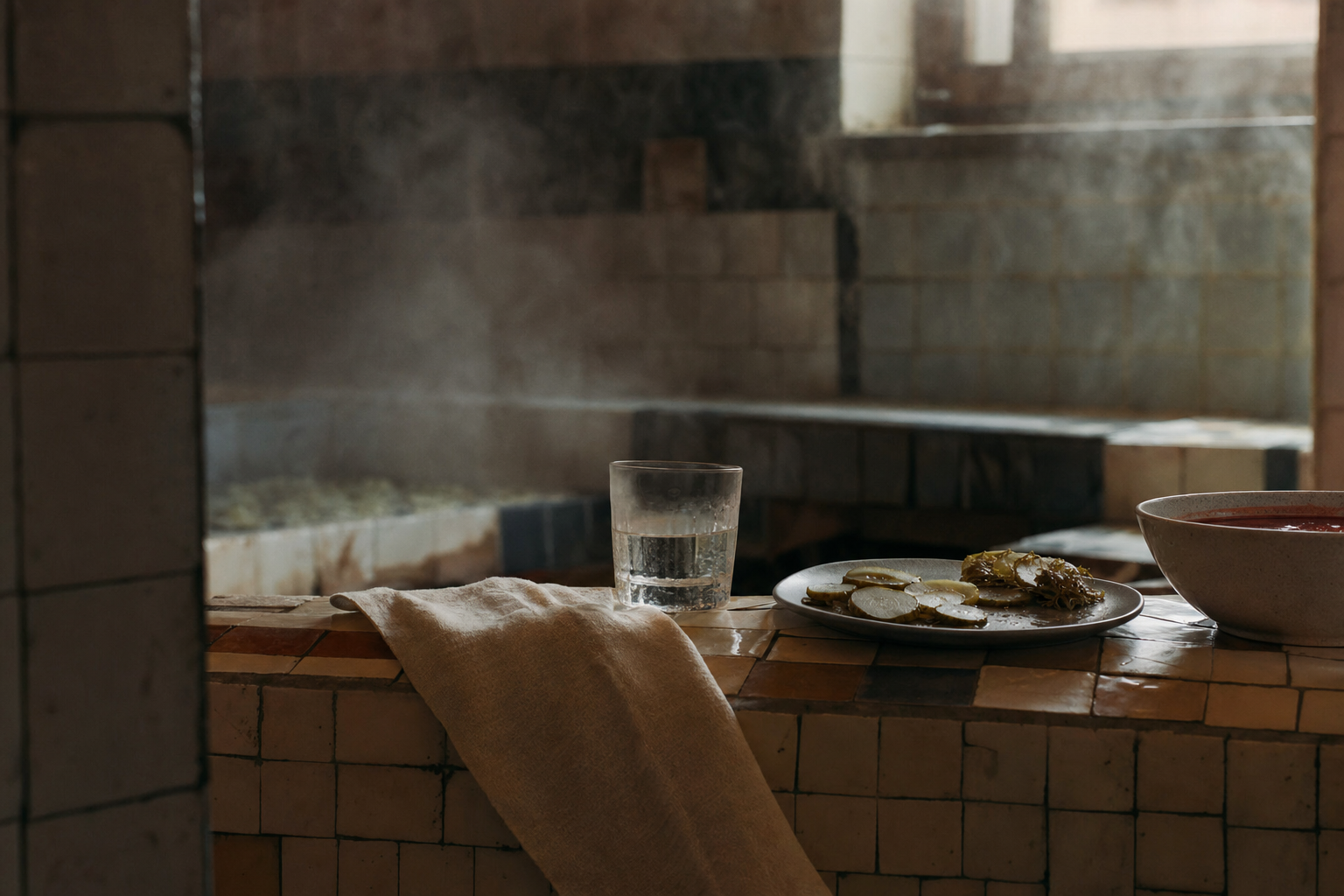
Chicago’s first great bathhouses weren’t designed for Instagram. They were built by people—Poles, Russians, Ukrainians—who needed their spas to do something real: sweat out a week’s work, scrub off soot, maybe nurse a cheap vodka hangover. Places like Division Street’s Russian & Turkish Baths could have passed for a train depot, if not for the clouds of steam and the quiet thump of someone being slapped with a venik in the next room.
Unlike New York’s spa scene—high-concept, always branded, forever buffed to a shine—Chicago’s best spas are hybrids. Soviet-era plunge pools, Helsinki-grade tiled steam rooms, and the kind of ice water buckets that make your teeth ache for the next five minutes. There is little interest in uniformity or sleekness. You hang your towel on a battered brass hook, and if you want eucalyptus, you’ll smell it before you see it.
Many of the city’s bathhouses are still family concerns. The regulars range from architects in tailored joggers to nurses in hospital-branded sweatshirts, to line cooks who have just finished a double shift and want a cold beer after the third sauna round. There’s no illusion that everyone is here for the same reason, and that’s the point. It’s not democratic, exactly, but it’s open in a way you rarely find south of 14th Street.
Design, when it matters, is pragmatic. Hooks for wet towels in every corner. Platters of pickles and hard-boiled eggs on a side table, sweating in the humidity. You notice the smell of eucalyptus and the faint trace of chlorine in the air. The benches are warm but not plush; you’re here to sweat, not recline.
If anything, the city’s Scandinavian influence is only growing. Aire Ancient Baths Chicago commands a cult following among people who claim to hate cults; newer Nordic projects in the West Loop have lines on Saturday mornings. But the Chicago version never loses its edge. At Red Square Spa last month, an Uzbek grandfather shouted at his nephew in rapid-fire Russian over a bowl of borscht. A lawyer from Lakeview was muttering about depositions while sweating out a hangover. The only person checking their phone was glancing at the Bulls score, not the tiles. No one is here for the photo.
Why Winter Is the Real Luxury
Wellness in Chicago isn’t about scented candles or peace lilies. It’s about surviving February. When the wind off the lake makes your face feel like raw steak, a hot pool or a heated stone is not a luxury—it's a requirement. The best spas in Chicago 2026 will still be defined by how well they help you thaw out.
The city’s extremes have bred their own rituals. You see it in the diehards lining up on Montrose Beach for the polar plunge, towels clenched between teeth. At Chuan Spa, the hot pools are busiest on the days when the city is shut down by lake effect snow. Finnish sauna culture, which Chicagoans have quietly adopted, is less about performance and more about necessity: you go to feel your hands again.
On a February afternoon at Kohler Waters Spa, the window ledge was buried under six inches of powder. Everyone in the hydrotherapy circuit swapped stories—about childhoods in Skokie, about the worst winter on record, about why the hydrotherapy jets here are more precise than anywhere else in the city. Self-care isn’t a lifestyle. It’s getting warm enough to grip your keys again.
Culinary Cross-Pollination
Chicago’s spas have always borrowed from the city’s food culture, but lately it’s become something more deliberate. At Aire Ancient Baths Chicago, the post-plunge snack is steamed egg custard rather than a handful of limp fruit. King Spa offers a short rib broth, unctuous and salty, served after a round in the hottest sauna. The flavors are as considered as the temperatures.
Drinks, too, are serious—without slogans. The rye highball at The Peninsula’s Z Bar is cold, spiced, and served with a wedge of orange that actually tastes like orange. Stop by after an hour in the eucalyptus room downstairs and it will be the best cold drink you have all week, regardless of what they call it on the menu.
Snacking is not just permitted, it’s quietly expected. At AIRE, a tray of peeled eggs, a dish of salt, and slices of brown bread pass between strangers in the relaxation lounge. Nobody makes a speech about minerals or protein. You eat because you’re hungry, and the hospitality feels genuine in a way that no “wellness retreat” ever manages.
A Social, Not Solitary, Wellness Ethic
Chicago spa-going is not an exercise in enforced silence. You might find a book group set up in the hot tub at Paradise Sauna, passing around battered copies of Baldwin and a thermos of tea, as likely as someone meditating alone with their eyes shut. Conversation is never forbidden; it often starts before you even put down your towel.
The forced serenity of so many wellness concepts elsewhere—soft chimes, wordless staff, endless hush—is nowhere to be found. At Paradise Sauna on a recent Friday, the community Q&A about recovery ice baths ran long because half the room wanted to argue the merits of plunges versus steam. No one was in a rush to end the debate.
There’s a preference here for shared experience—even awkwardness—over tranquility that’s been curated into blandness. You talk, you sweat, you learn something about your neighbor’s knee surgery. That’s the ethic. The spa is not a sanctuary. It’s a living room with more hot water.
What New York and LA Get Wrong
On the coasts, wellness is a product. It’s individualized, expensive, and always filtered. The best spas in New York or LA feel like showrooms—every robe pressed, every candle lit strategically, every moment ready for a post.
Chicago refuses spa preciousness. Here, the essential pleasures are warmth, water, and the comfort of a little noise. I once overheard at King Spa: 'You don’t need a robe to feel welcome here. Just come hungry and mind the wet floor.' That’s the entry requirement.
In Chicago, the spa is less a sanctuary and more a commons: warm, noisy, and honest about what the body needs.
You leave a Chicago spa not with a set of intentions but a towel that needs wringing out. Its spa culture can’t be packaged, franchised, or exported—because it isn’t trying to be. The sharpest luxury here isn’t what’s on offer, but what’s absent: pretense, branding, and the sense you’re supposed to be anywhere but here.